
April 18, 2026 · 9 min read
Look from the ground first
Dents in the eavestrough, downspouts, vents, or the top of an air conditioner are the easiest tell. Hail-dented trough often needs gutter repair even when the roof is fine. If metal on the property is dented, the shingles took the same hit.
Check the softer targets too: window screens, deck furniture, the mailbox, vinyl siding on the storm-facing side. Adjusters look at the same things, and they call it collateral damage. It is what supports the claim when the shingle damage is hard to see.
Piles of granules at the bottom of the downspout are another sign, though some granule loss is normal on a new roof.
Roof damage is often subtle
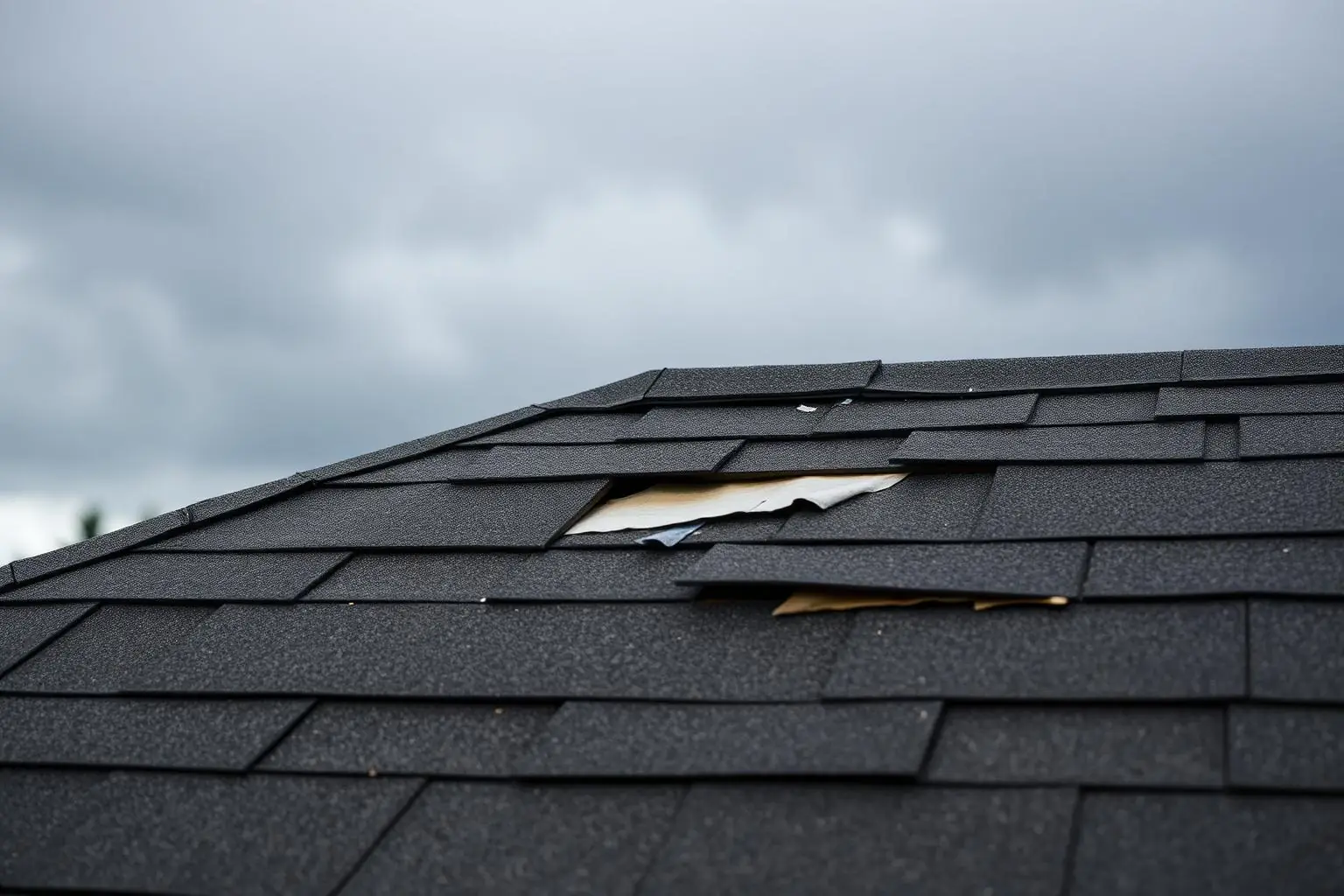
Hail rarely punches holes. It bruises the shingle: the mat is crushed and the granules knocked off in a small circle, soft to the touch like a bruise on fruit. Those spots weather fast and start leaking a year or two later, long after the storm is forgotten.
Damage is also uneven. The slope facing the storm can be covered in hits while the opposite slope is untouched, which is why a walk-around from the ground rarely settles it.
That is why claims are usually tied to a storm date. Get it looked at while the date is fresh and the weather record is easy to pull.
Document before anyone repairs anything
Photograph the dented metal, the granule piles, and any interior staining. Note the date and time of the storm. Keep receipts for any emergency work such as tarping, because most policies cover reasonable steps taken to prevent further damage.
Do not have anything permanently repaired before the adjuster has seen it, unless water is actively coming in. A tarp is fine. A new roof is not.
We photograph the roof itself, mark the hits with chalk on a test square, and put it in a storm damage report your adjuster can read.
How the claim usually goes
You file, an adjuster is assigned, and they look at the roof themselves or send a contractor to do it. If damage is accepted, most Alberta policies pay actual cash value first, then the remaining recoverable depreciation once the work is finished and invoiced.
You pay the deductible. That part is yours no matter who does the work.
You are allowed to choose your own contractor. The insurer may recommend one, but that is a recommendation, not a requirement. What matters is that the quote matches the scope the adjuster approved, and that any missed items are raised as a supplement before work starts.
About the door knockers
File the claim yourself, in your own name. Be careful with anyone who shows up after a storm offering to cover your deductible, or who wants you to sign a contract before you know the outcome of the claim.
Covering a deductible is insurance fraud, and it tells you exactly who you are dealing with. So does a company that cannot show a local address, a business licence and proof of WCB and liability coverage on request.
Storm chasers leave the province in October. The workmanship warranty they hand you is only worth something if there is somebody here to honour it.