May 9, 2026 · 7 min read
They are the same thing
An eavestrough is a gutter. A gutter is an eavestrough. There is no product difference, no performance difference and no reason to pay more for one word than the other.
Eavestrough is the older Canadian term — literally the trough along the eave — and it is still what most people in Alberta say. Gutter is the term most manufacturers and suppliers use on their packaging, which is why you will see both on the same quote.
Where the confusion comes from
Some contractors imply that eavestrough refers to the residential trough and gutter to a commercial or industrial system. That is a sales distinction, not a real one.
If someone quotes you for 'gutters' and someone else quotes 'eavestrough', compare the actual specifications: profile size, material and gauge, seamless or sectional, hanger type and spacing, downspout count. That is where real differences live.
Seamless vs sectional — this one matters
Sectional trough comes in pre-cut lengths joined every few feet. Every joint is sealed at install, and every sealed joint eventually fails. It is cheaper up front and it is what you find on a lot of older homes.
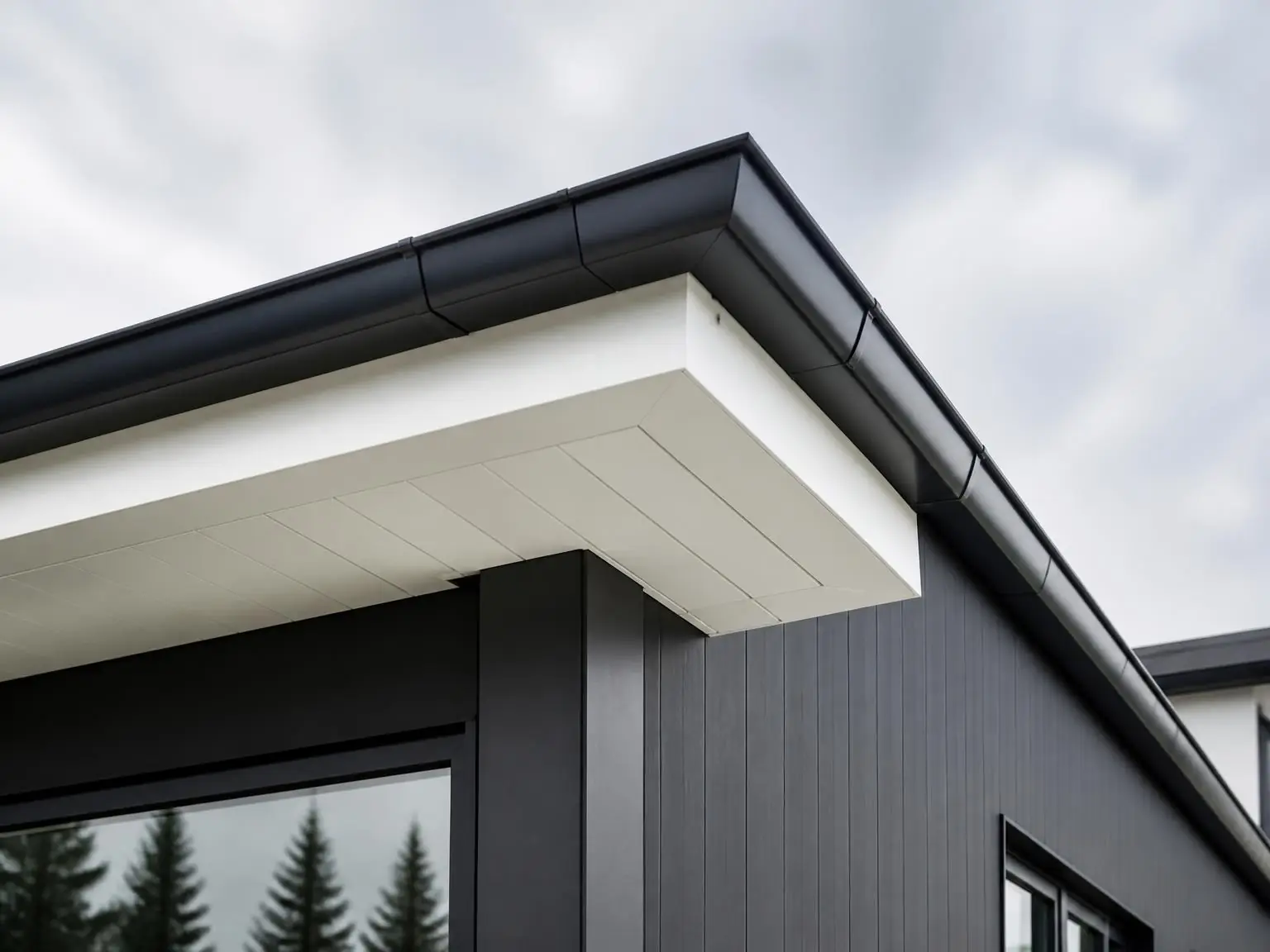
Seamless trough is formed on site from a coil, so a forty-foot run is one continuous piece. The only joints are at corners and outlets. It costs a little more and it is what we install, because in a freeze-thaw climate a joint is a future leak.
Five inch vs six inch — this one matters too
Five inch K-style is the standard residential profile and it handles most single-storey Edmonton homes without complaint.
Six inch carries substantially more water and pairs with larger downspouts. It earns its price on long roof runs, steep pitches, and any home that has overflowed at the same corner every spring since it was built. Steep roofs deliver water faster, and a narrow trough can be overshot entirely during a hard summer downpour.
Material and gauge
Aluminum is the practical default here: it does not rust, it takes a baked finish, and it can be formed on site. Gauge is worth asking about — heavier aluminum resists hail denting and holds its shape better under ice loading.
Steel is stronger but rusts from the inside once debris holds moisture against it. Copper looks superb and costs several times as much. On most Alberta homes, a heavier-gauge aluminum in a matched colour is the sensible choice.
The words worth asking about
Forget gutter versus eavestrough. Ask whether the run is seamless, what profile it is, what gauge the aluminum is, what hangers are used and how far apart, how many downspouts are included and where they discharge.
Those answers tell you whether two quotes are actually comparable. We put all of them in writing on every eavestrough estimate.