
May 30, 2026 · 8 min read
Overflow is not always a blockage
If water sheets over the front edge during a heavy rain but the trough is clean, the trough is undersized for the roof feeding it. A large slope draining into one small run puts more water through than 5-inch can carry.
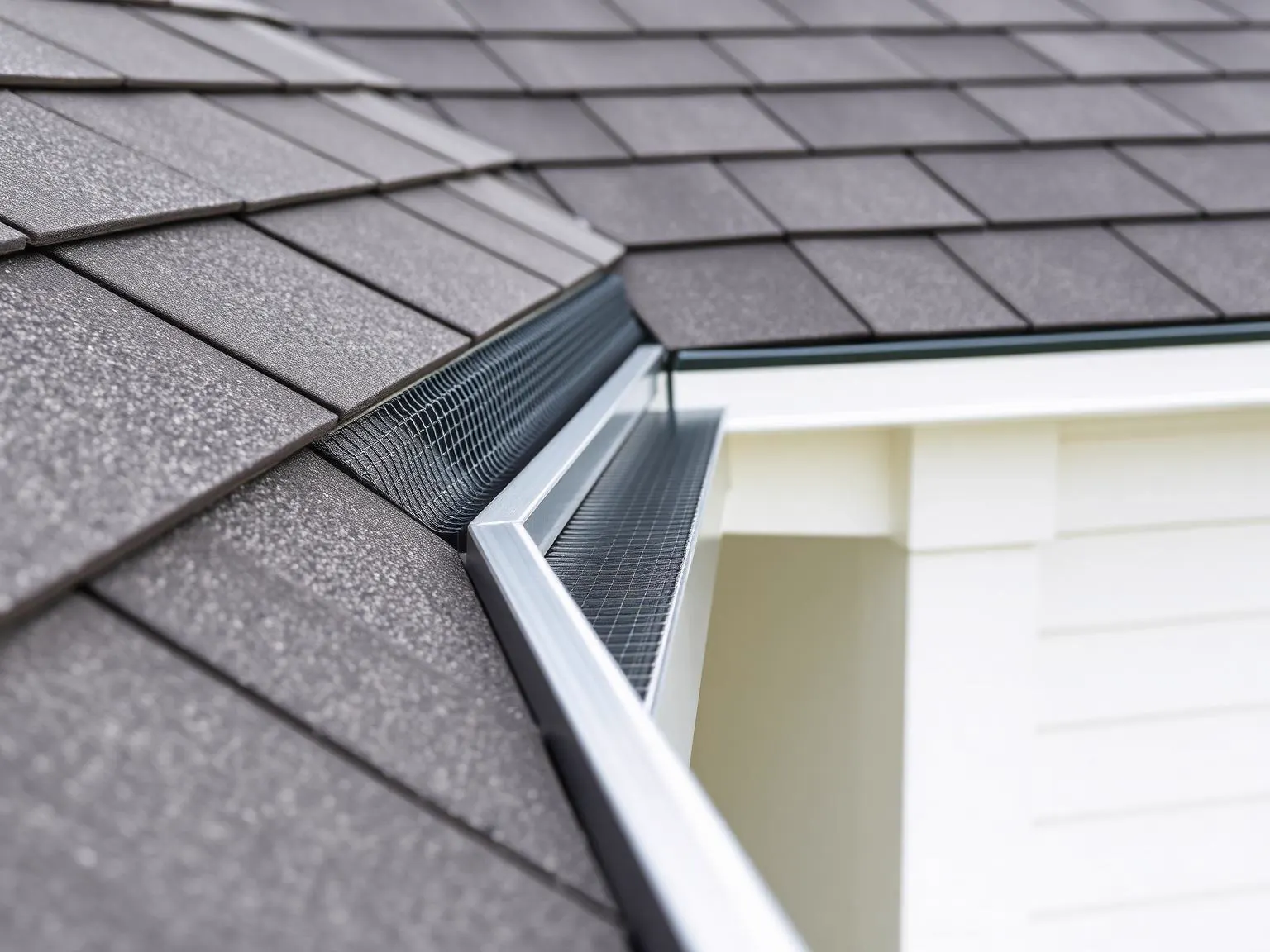
Big steep roofs and long single runs are the usual culprits. So is a valley that dumps the drainage from two slopes into one short section of trough, which will overshoot no matter what size it is unless there is a splash guard there.
When to step up to 6-inch
Six-inch trough with 3x4 downspouts moves roughly double the water of standard 5-inch with 2x3. It is worth it on steep roofs, long runs, and anywhere a valley dumps into one spot.
Six-inch also clogs less, because the outlet opening is bigger and debris passes through instead of bridging across it. On a treed lot that alone can be the reason to go up a size.
Downspout count matters as much as trough size. Two properly placed outlets beat one oversized run every time. If a 40-foot run has a single downspout at one end, adding a second is usually cheaper and more effective than replacing the trough.
Seamless means made on site
Seamless eavestrough is rolled from a coil on the truck to the exact length of your wall, so the only joints are at corners and outlets. Fewer joints means fewer places to leak later, and joints are where old trough almost always fails first.
Aluminum in a heavier gauge holds its shape better under ice load and against a ladder. Hidden hangers screwed into the fascia hold far better than the old spike-and-ferrule method, which works loose as the wood expands and contracts.
Colour is matched to the fascia or the trim, and the same coil stock is used for capping so it all reads as one piece.
Slope and placement
Trough needs a slight fall toward each outlet, roughly a quarter inch every ten feet. Too little and water sits in the run. Too much and it looks crooked against the fascia line from the street.
The front edge should sit slightly below the plane of the roof, so snow sliding off passes over the trough instead of catching it and tearing it away. Getting this wrong is a common cause of trough damage in a February thaw.
Where the water goes after
Good trough with a downspout emptying beside the foundation just moves the problem. Extensions should carry water at least six feet out onto ground that slopes away from the house.
Watch where the discharge lands. Onto a walkway means an ice sheet all winter. Onto a flowerbed with no grade means a wet basement wall. Underground drainage to daylight is better where the lot allows it, provided the pipe is deep enough not to freeze solid.