
May 23, 2026 · 8 min read
First, watch where it comes over
Overflow tells you a lot depending on where it happens. Water pouring over one small section usually means a blockage or a low spot. Water coming over the whole run at once means the system is undersized or short of outlets.
Water coming over the back edge, between the trough and the wall, is a different problem entirely — that is usually a missing or badly set drip edge at the roof line, not the trough at all.
Cause one: blockage
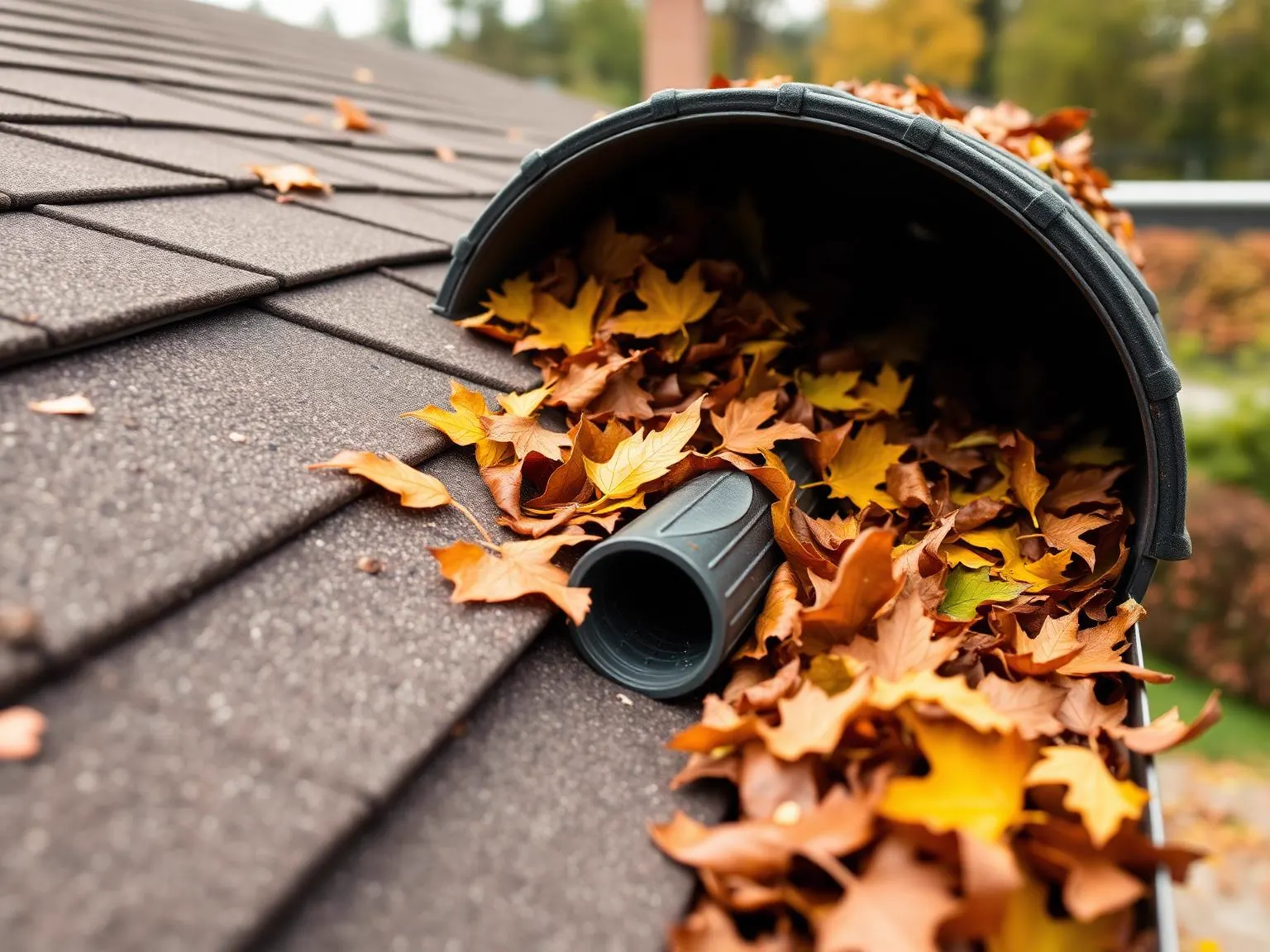
The most common by far, and the cheapest to fix with a gutter cleaning. Leaves, spruce needles, shingle granules and roof grit collect at the outlet where the trough necks down into the downspout.
Test it with a hose. If water backs up at one point and runs freely elsewhere, you have found your blockage. Check the downspout too — an elbow packed with needles will not clear from the top no matter how much you poke at it.
Cause two: lost slope
Trough should fall gently toward the outlet, roughly a quarter inch over ten feet. Ice loading, loose hangers and simple age flatten that out, and a flat trough holds water instead of moving it.
You can spot it after a rain: standing water in a run that is otherwise clean. The fix is re-hanging the run to correct the fall, which is straightforward as long as the fascia behind it is sound.
Cause three: not enough downspouts
Every trough has a limit on how much water it can carry to an outlet before it goes over the front. A single downspout at one end of a long run means water has to travel the whole length, and in a heavy rain it simply cannot get there fast enough.
Adding an outlet mid-run is usually cheaper than resizing the entire system, and it fixes the problem at the source rather than moving it along.
Cause four: undersized for the roof
A 5 inch trough on a steep, long roof plane will overflow no matter how clean it is. Steep pitch delivers water fast, and volume that a shallow roof would spread over minutes arrives in seconds.
This is also what happens when a house gains roof area — an addition, a garage, a new covered deck — without anyone revisiting the drainage. More roof, same trough, predictable result. Six inch trough with matched downspouts is the answer here.
Why it is worth fixing now
Overflow runs straight down beside the foundation. In a wet spring that is how basements get damp and window wells fill, and correcting that costs many times what the eavestrough work would have.
It also runs behind the trough onto the fascia. Painted wood soaks it up, the paint lifts, and the board rots from the back where nothing is visible until the trough comes off.
We will find which of the four causes you have, show you the photo, and quote the fix that actually addresses it — not the most expensive one on the list.